Photographing Globalization
Spending ten days with the crew of a cargo ship on their voyage from the Gulf of Panama to the Hudson river.
essays
This is a photo-project from the archives. I combined it with the original trip report and a new visualization of the journey.
After three months of writing e-mails and making phone calls, I managed to convince Briese, a German shipping company, to let me board the BBC Danube in Panama.1 So I carved out $300 from my fixed budget by living off of PB&Js and lentils for a month and booked myself a ticket to Panama.
The path of the BBC Danube before and after my stay.
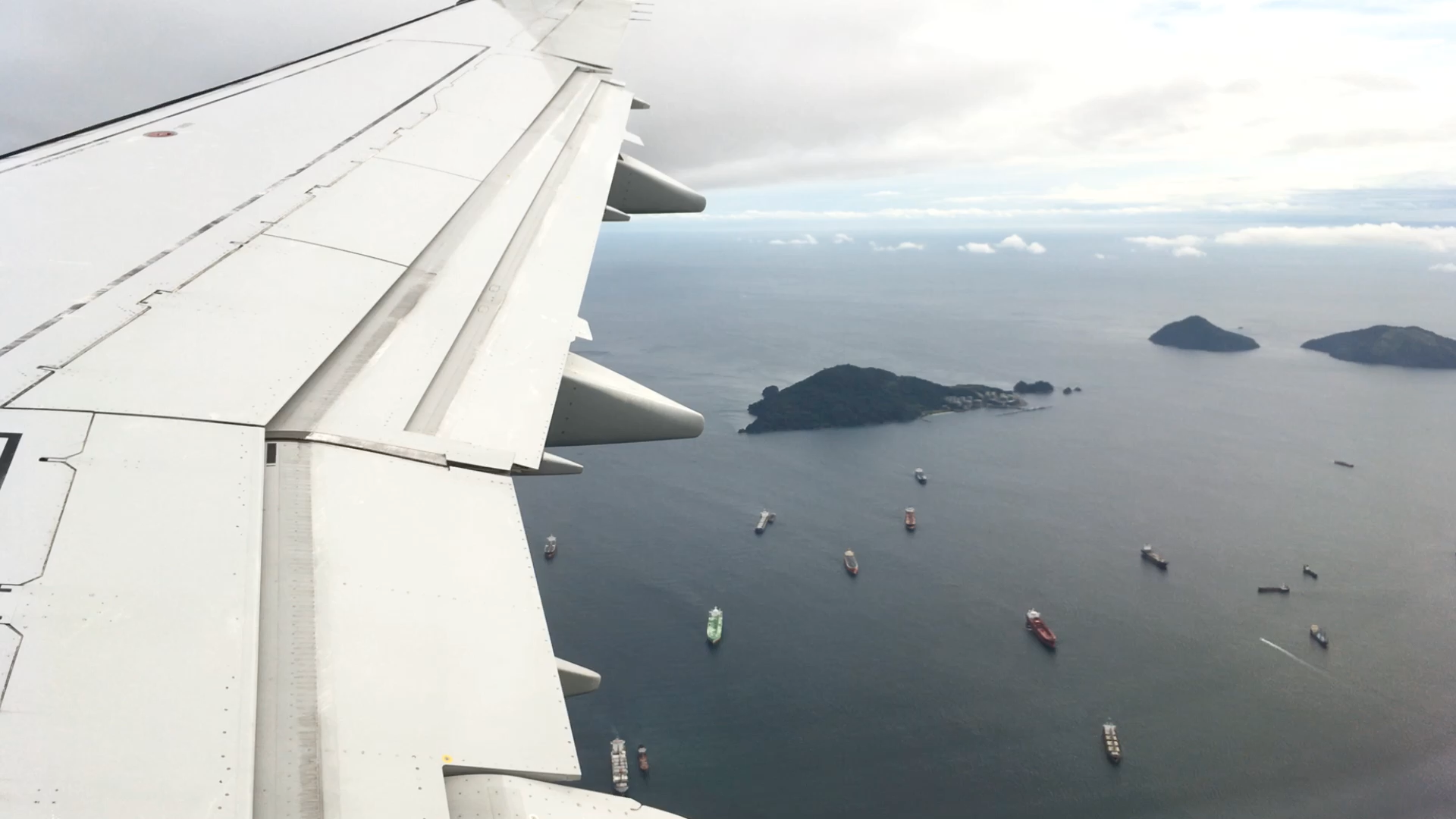
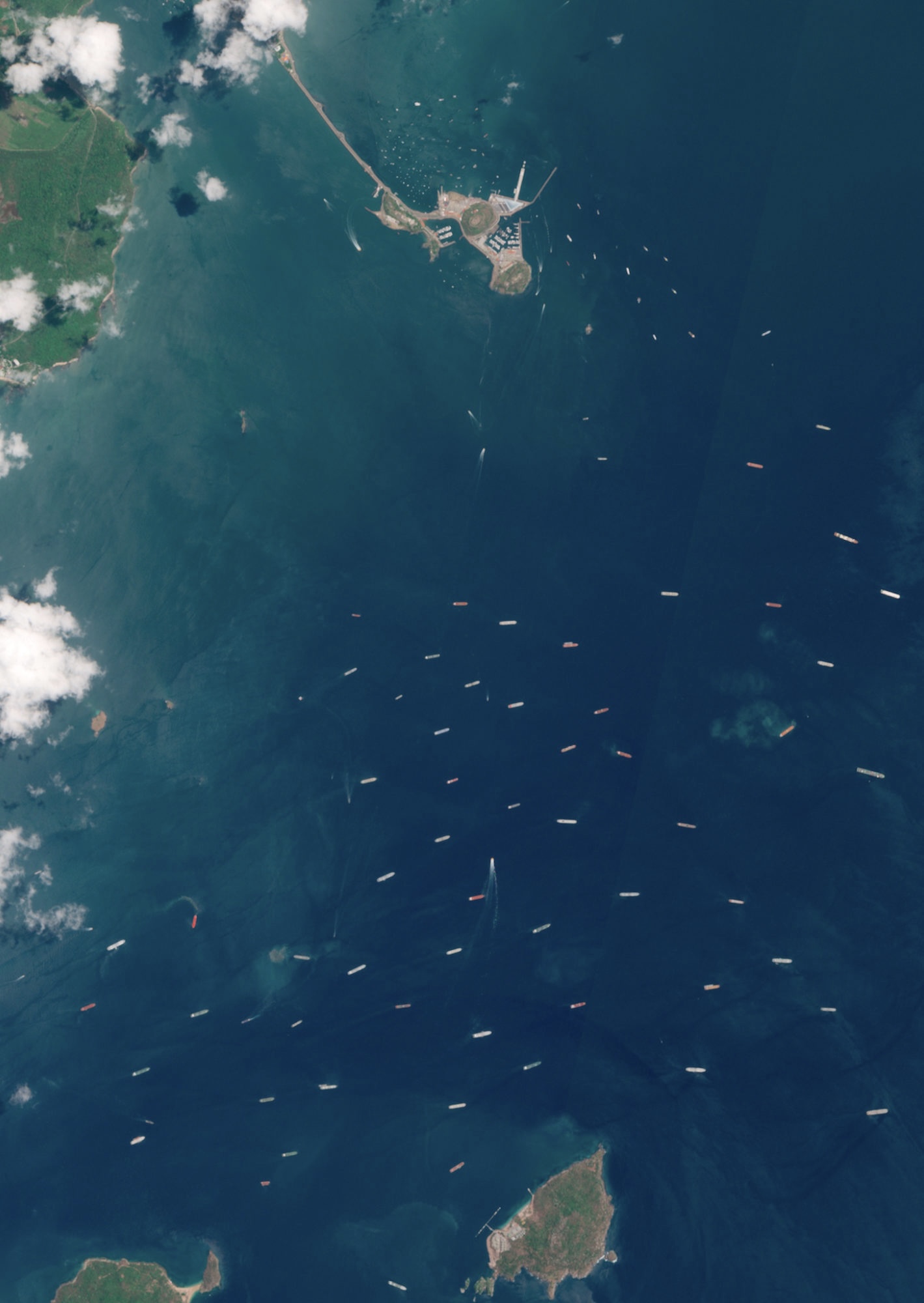
While descending towards Tocumen Airport, I caught the first glimpse of my destination. Around 14,000 ships pass through the Panama Canal every year. So despite clouds covering parts of the view, I could make out ships forming an enormous triangle pointing towards the canal. Large vessels need to be inspected by the Panama Canal Authority before their passage. Until then (and until their assigned time-slot) they anchor off the port of Balboa.
After landing, I dragged my luggage out of the airport to the next bus stop. I was woefully underprepared, without internet connection and only the hotel's address in hand. A gracious fellow bus rider noticed my clueless stares and made it her goal to get me where I needed to go. She called her daughter to translate 2 and we rode the bus together until her stop. Before she left, she imparted a few last directions to me that would get me the rest of the way to the hotel.
Two days later, a driver picked me up at my hotel. After a fast and furious 20 minute ride, we passed the industrial harbor and pulled into the Balboa Yacht Club, a small private harbor with one long, floating boat bridge. The air was sticky and it would continue to be that for the next couple of days. It was raining and the boat bridge was groaning reluctantly under the swell. I hopped onto a small boat, driving out into the Gulf. Water was splashing against my window and obscured the view while we were speeding through a sea of gray monotony. Ten minutes into the ride, the outline of a ship emerged from the rain.
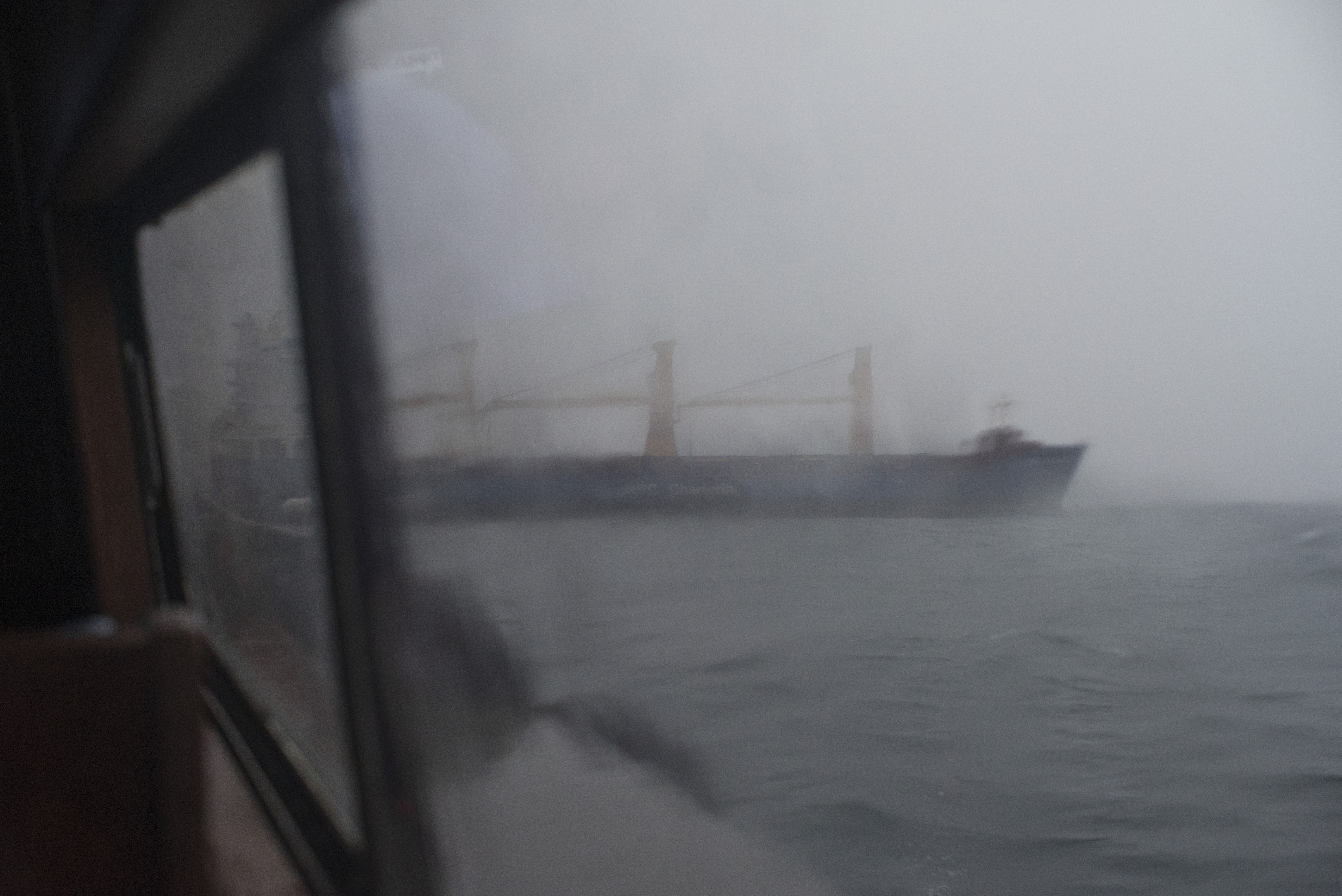
My heart started beating faster when we pulled up next to the towering hull of the BBC Danube. I was excited before but it wasn’t until now, within arm's reach of the floating metal structure, that it felt real and tangible. I rushed outside and climbed the rope ladder up to the first deck.
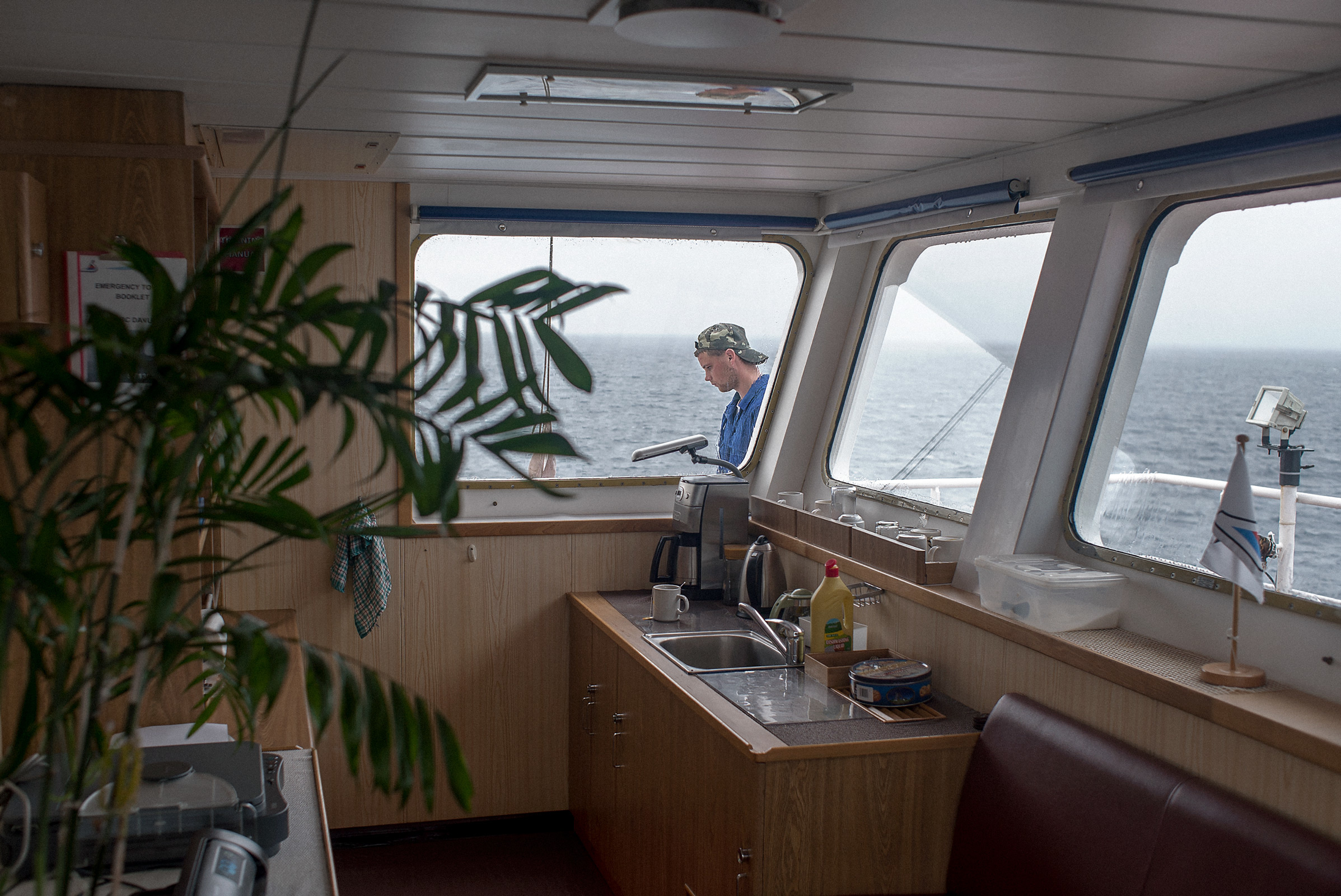
Once on board, I was greeted by Second Officer Davyd, who showed me to my cabin. He sat down with me to talk through my stay. Security concerns, safety drill schedules, dinner times. He was in no rush and generously answered any question I had. Davyd was from Crimea, Ukraine. He was thirty-two and married. Because he seemed chatty and comfortable, I asked him about his last year at home and how he experienced the war. To my surprise, he couldn’t tell me much about it. 3
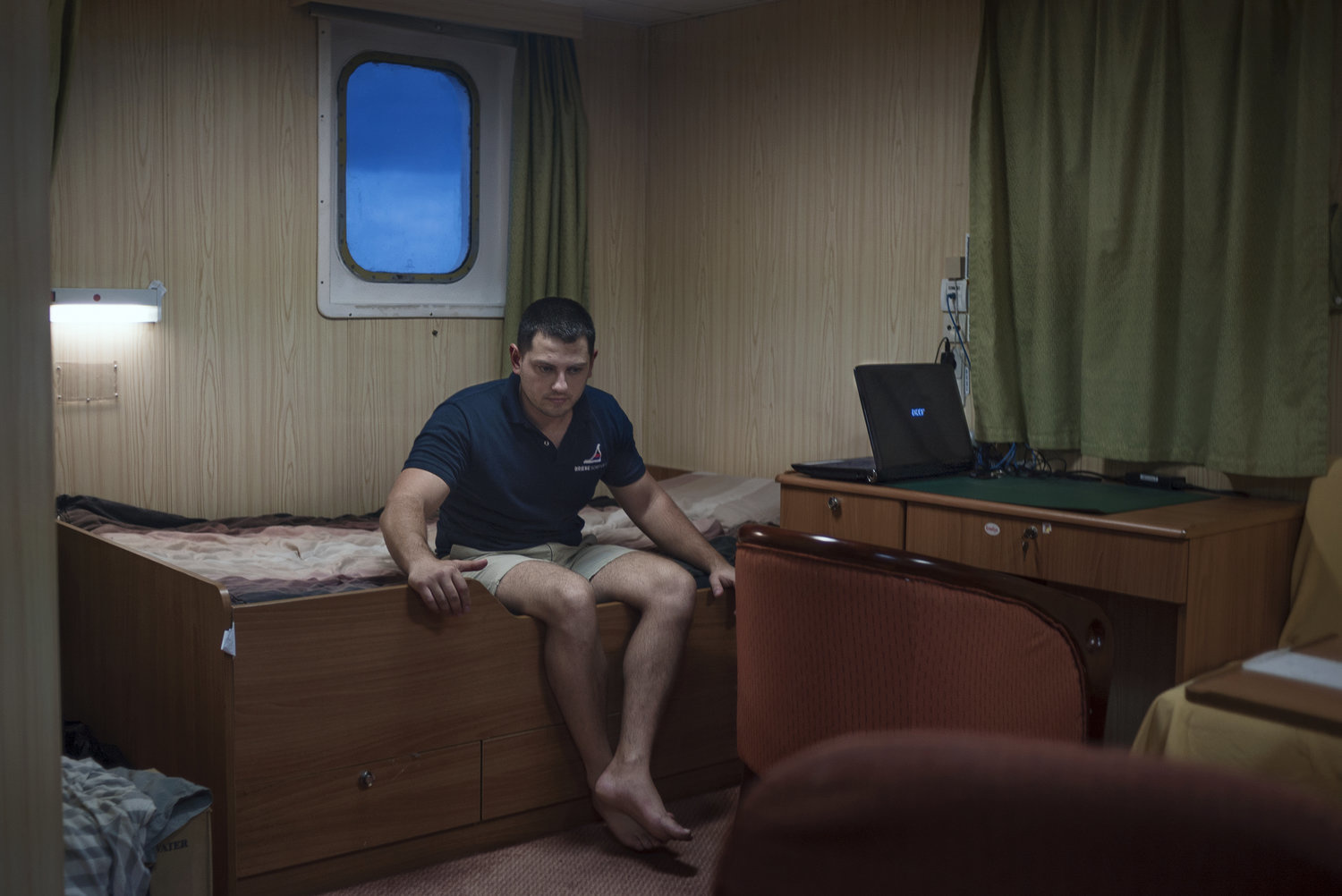
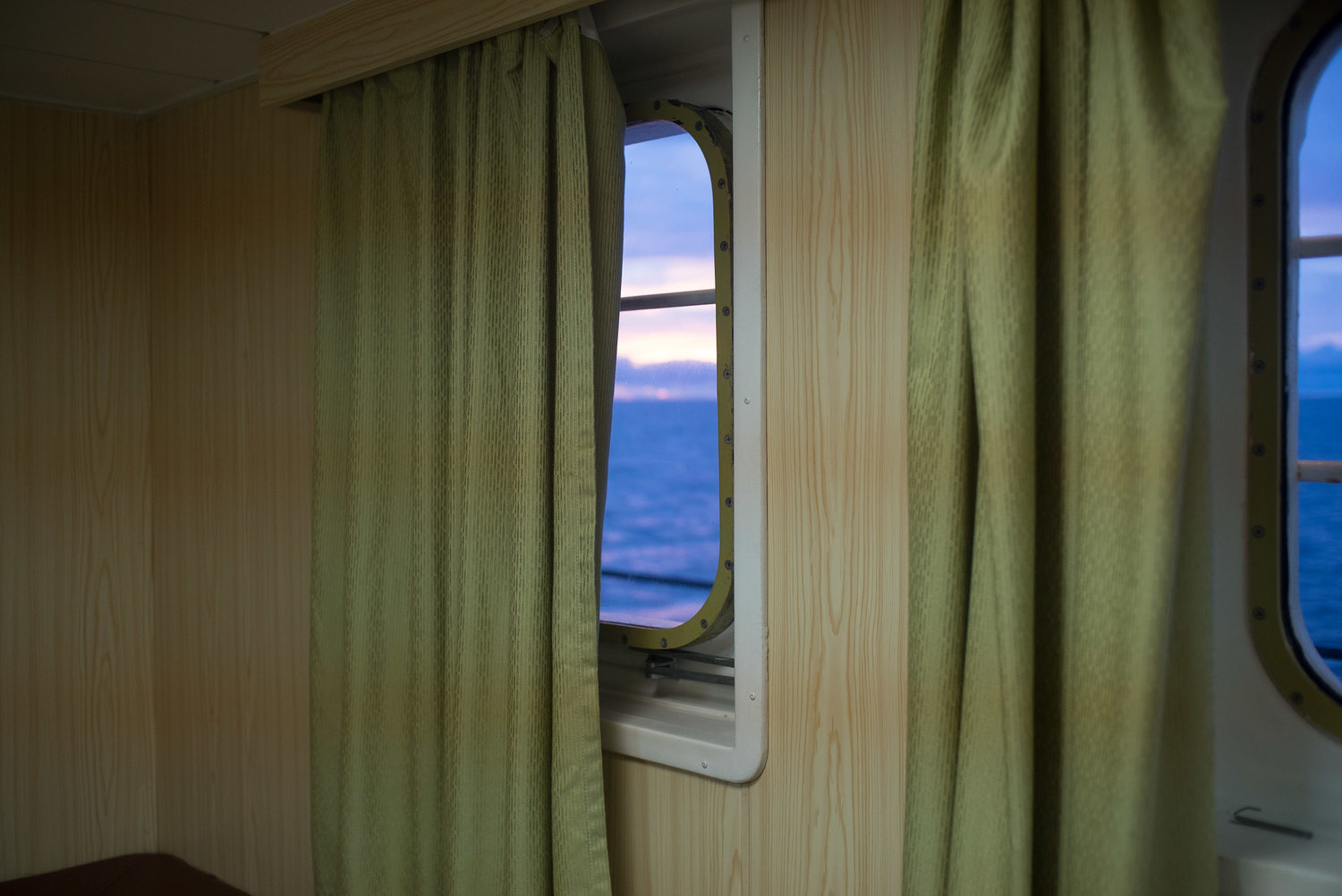
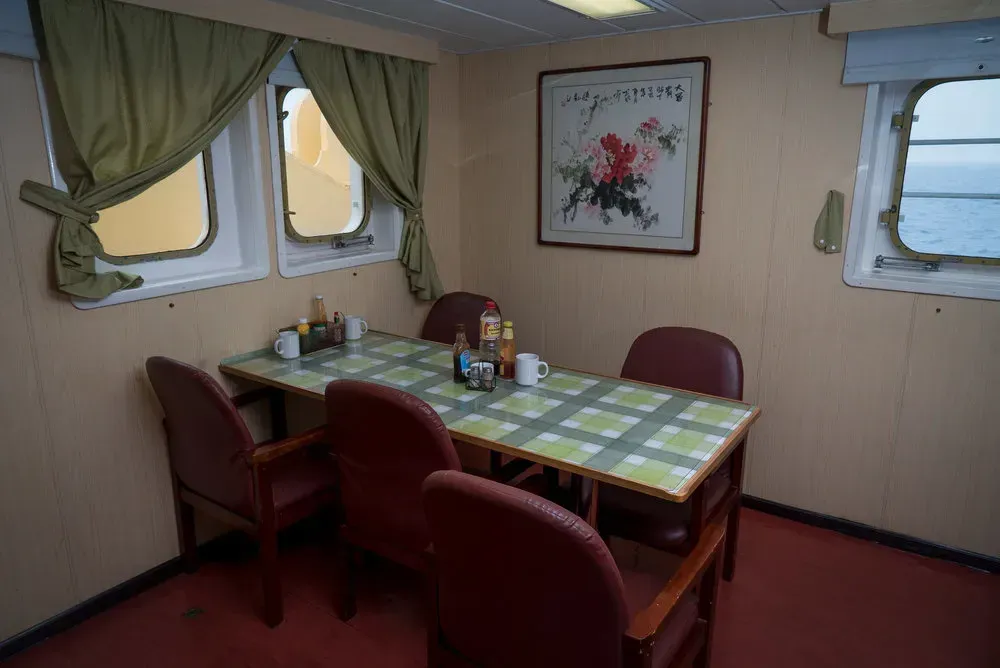
After he left, I unpacked my camera gear and started to familiarize myself with the ship. Most crew members used the time during anchorage to rest in their cabins. Slippers were placed on doormats in front of their cabins and towels hung from handrails in the hallways. Through portholes I could see the heavy clouds still obscuring the sky. Aside from the muffled sound of the rain and the steady hum of the ship, it was quiet. The interior was furnished with burgundy cushioned chairs, khaki curtains, framed Chinese brush paintings,4 and every table in the mess had its own set of sauces and spices on them. But no matter the time of day, communal spaces seemed to be used infrequently and only out of necessity. Despite the temperature dropping below freezing later during our voyage, the sauna on the lower deck stayed cold. Creating a sense of home seemed to be limited by the reality of living on a several thousand ton floating metal structure that was oftentimes surrounded with nothing more but a wet desert stretching hundreds of miles towards every cardinal direction.
The crew was made up of 17 men, mostly from Ukraine and Russia. The two exceptions from the Slavic majority were the German captain and his son who would be on board for a two-month long internship as a machine room engineer and who would already envy me leaving the ship after ten days. After living with an abundance of possibilities on land, staying on a ship comes a shock. The crew cannot leave the ship (for obvious reasons) and everyone on board usually works six days a week, eight hours a day. The remaining time is meant for sleeping, eating, and recreation. But spending months in a confined space optimized for the economic transportation of goods presents its own set of challenges for recreation. Some of the common pastimes were pull-ups on suitable structural elements, reading, or writing. The most communal event I got to witness during my stay was a session of counterstrike including everyone who happened to be available. I declined to participate since I was self conscious about my atrophying FPS skills.
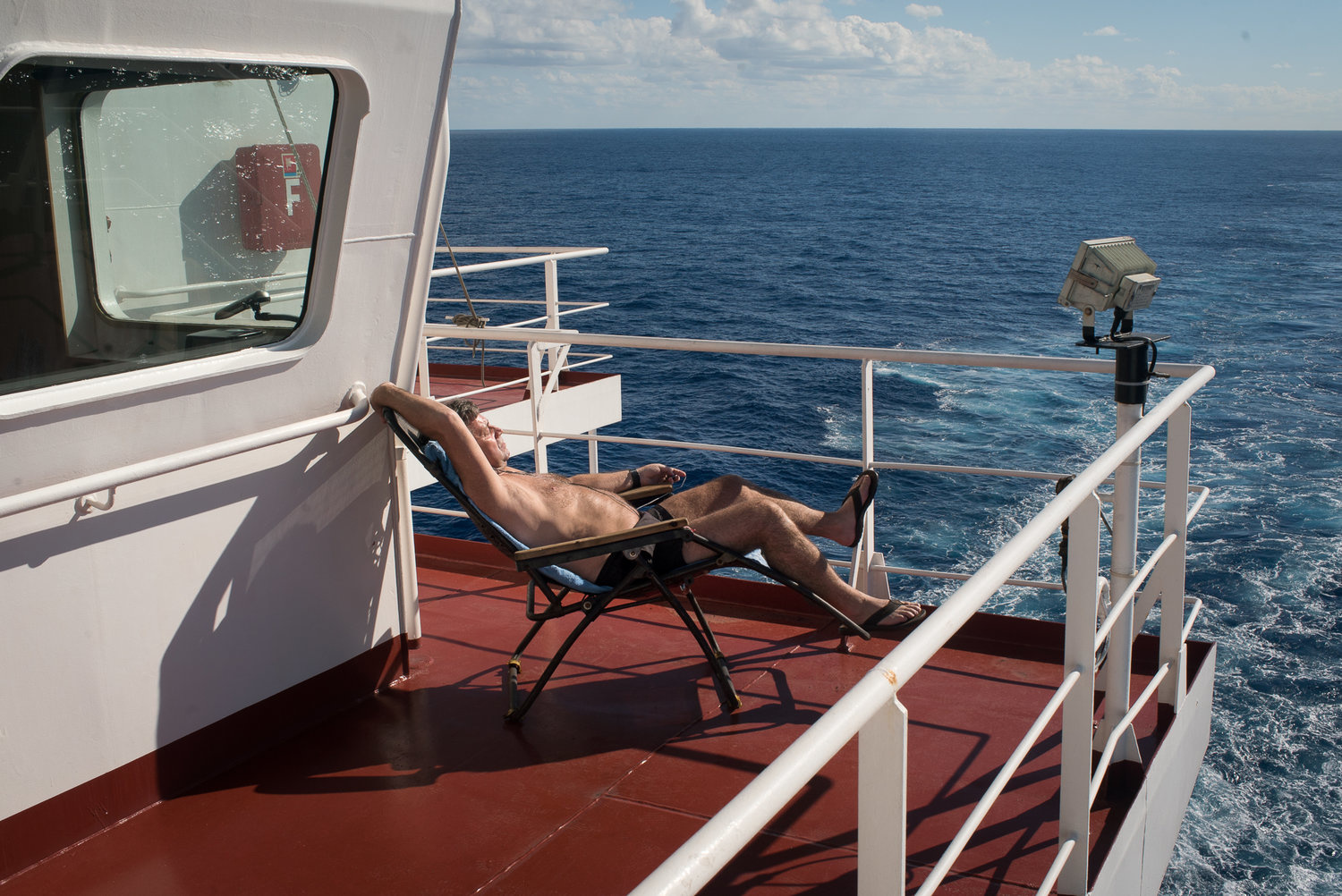
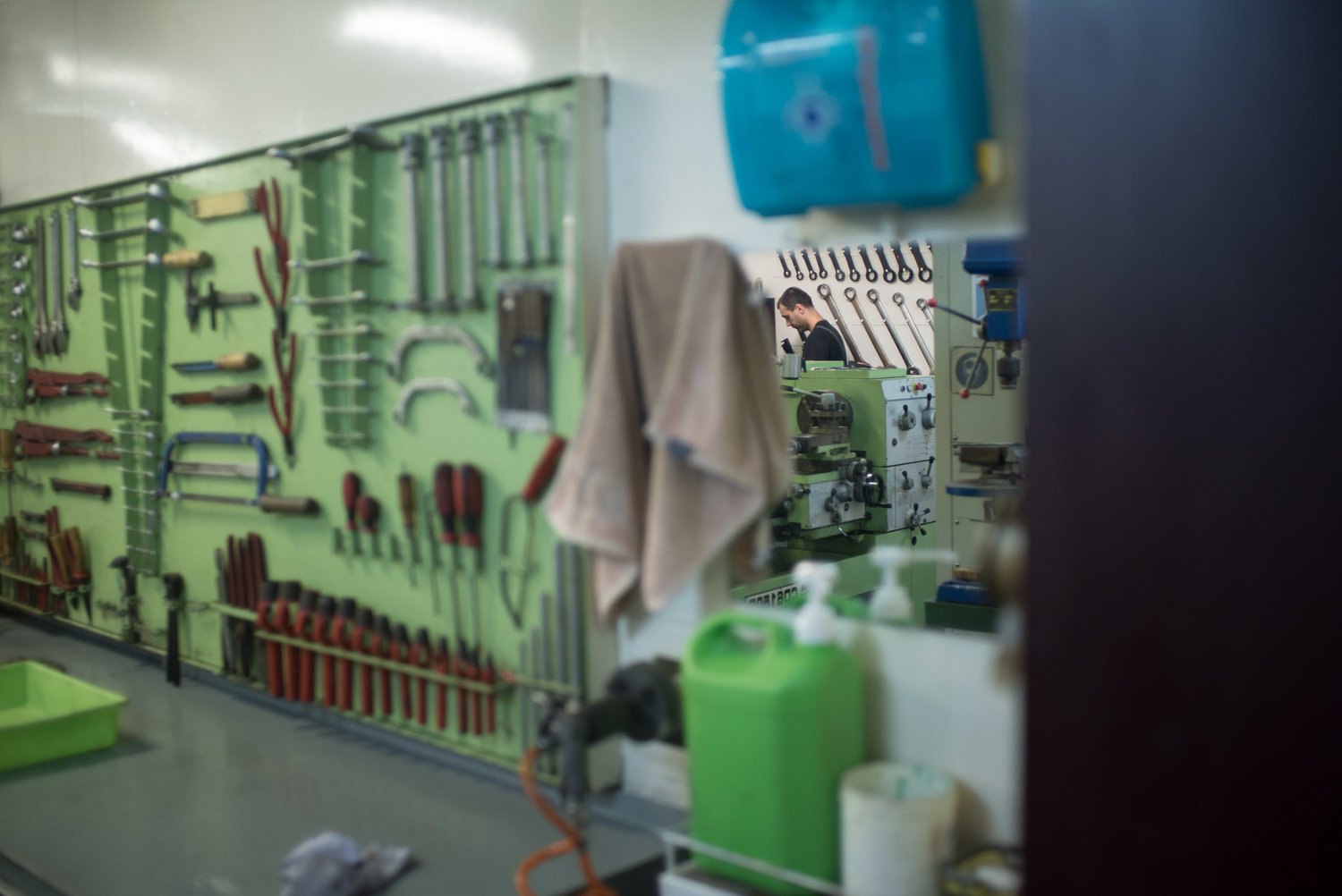
Working on a cargo ship is a repetitive endeavor. During my time on board, I met two men who kept scrubbing the deck day after day after day. Others would do constant maintenance work like removing rust or painting the hull. The machine room requires 24/7 supervision.
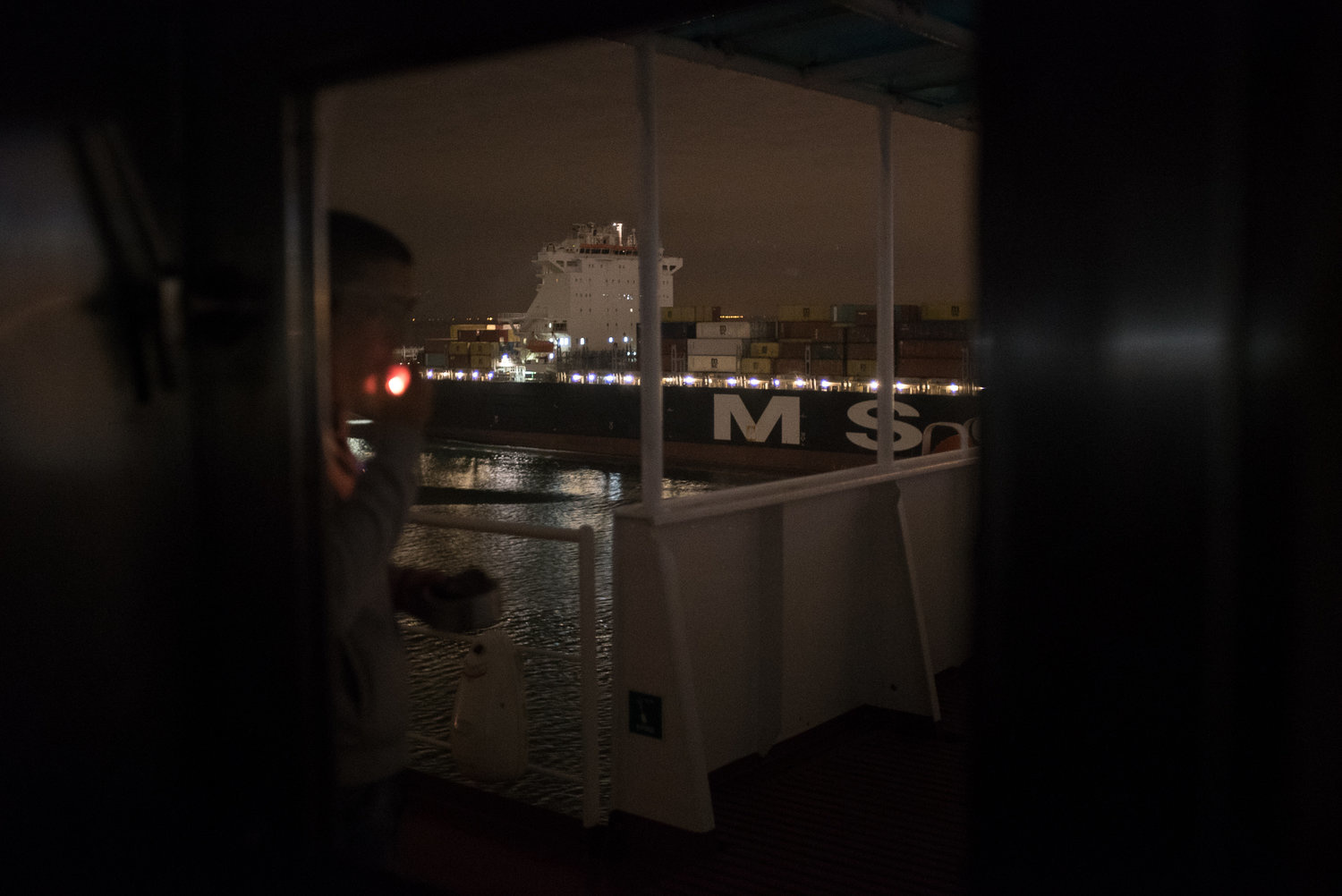
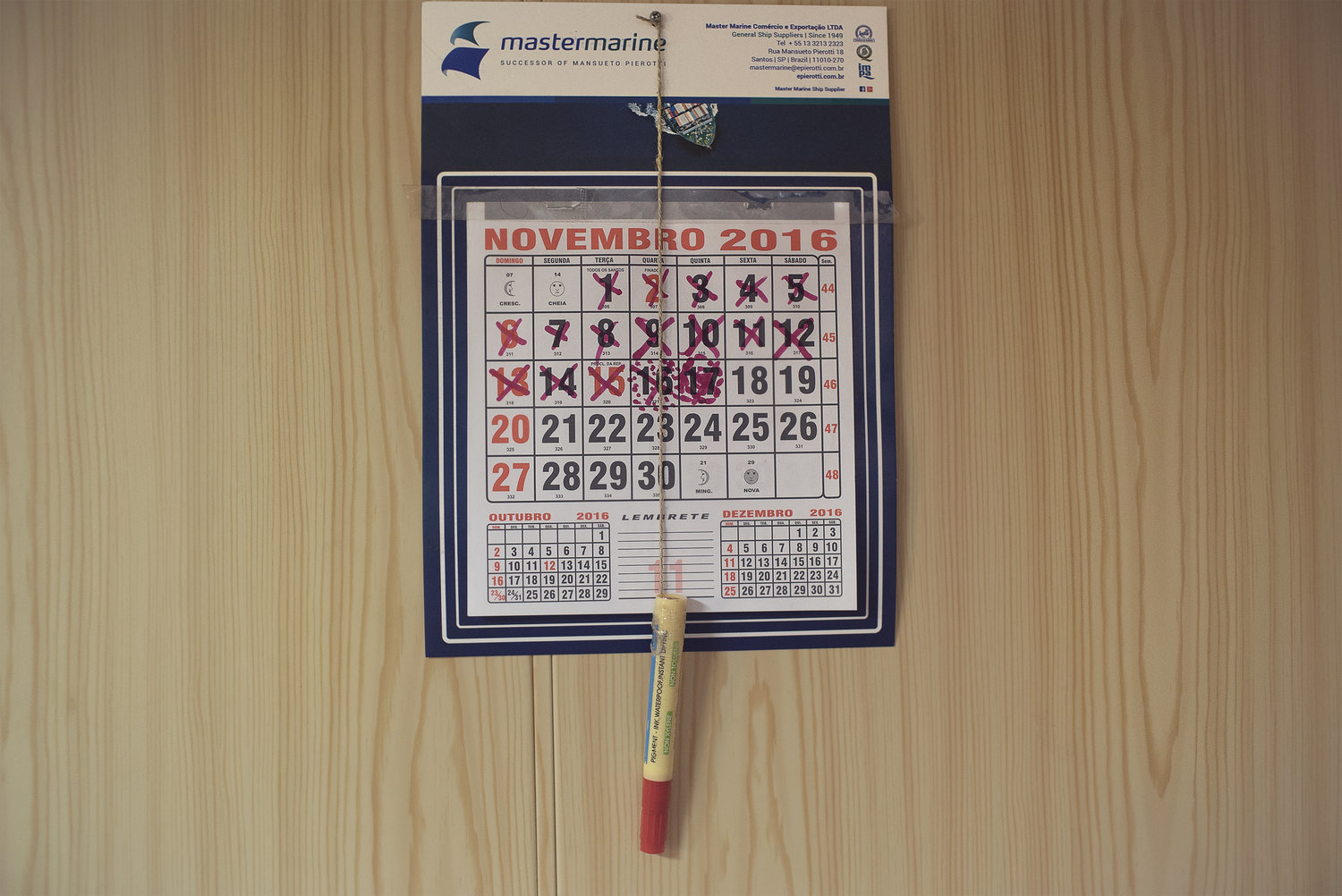
The communication between crew members was contained. Ernest Hemingway once wrote: “It was considered a virtue not to talk unnecessarily at sea […]” and it held true on this ship. Everybody got along but extensive conversations were rare, which seems natural when working the same repetitive tasks for months on end. Contracts usually range from 2 to 6 months on the water, only interrupted by rare day trips and paid email service. When I stepped foot on the vessel in Panama, the crew already lived through 30 days on the Pacific Ocean, only to add 10 more days on the trip to New York before moving on to Great Britain.
A stranger on board apparently brought some fresh air. When I showed interest, everybody was happy to give me a glimpse into their life, either the one on board or the one back home. Chief Officer Maksim took an hour during his early morning shift on the bridge, breaking out the sextant (which today has been supplanted by GPS) to teach me about celestial navigation and zodiac signs. The countless nighttime hours that he spent on the lookout for other ships gave him the ability to seamlessly connect and name the signs while letting his gaze wander over the night sky.
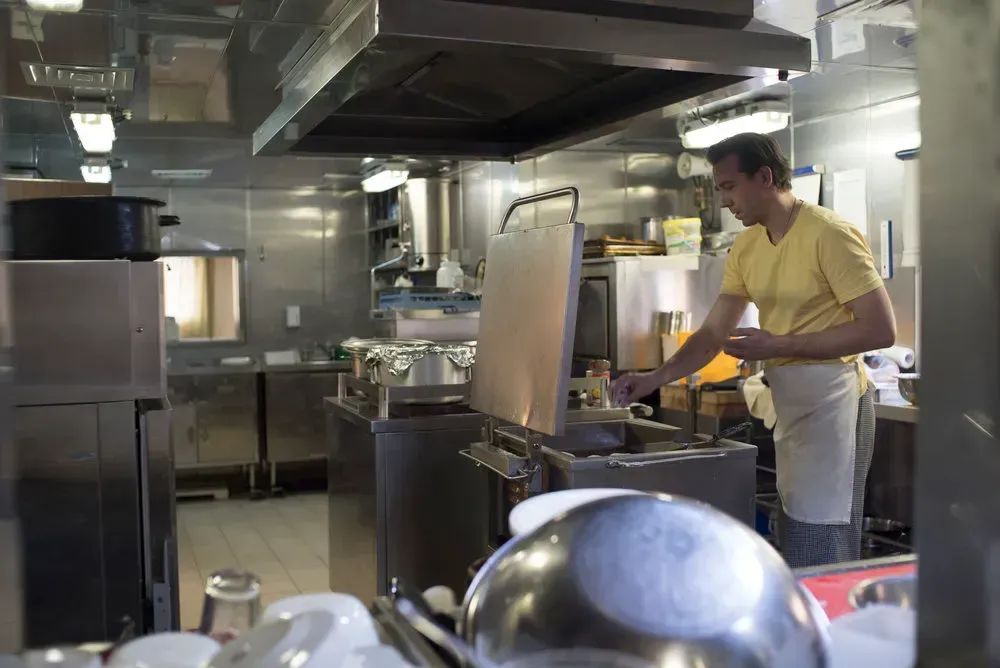
The place I became a frequent visitor of was the galley of Cook Volodymyr where he spent most of his waking time preparing breakfast, lunch, and dinner for the 18 people on board. He talked to me about supplies (they were running low),5 what he was cooking and baking (Borscht, Chebureki, Bread) and about his life in Ukraine. Back home he also worked as a cook but would earn ten times less than now, which drove him into debt and finally onto this freighter, accepting an unusually long contract that would bind him to the ship for nine months.
An estimated 90% of all goods are transported by ship and at this very moment, there are over 1 million seafarers, working on more than 50 thousand commercial ships across the globe. Most sailors I spoke to would rather work a different job, everyone misses their family and nobody gets paid particularly well. Still, for many of them, working on a ship was the best opportunity they had.
I don't mean to cast doubt onto the global shipping system. But I hope to convey a sense of appreciation, not only for the complexity and interconnectedness of our modern world, but also for the human work and experience that hides behind plentiful grocery store aisles and online checkout forms.